Job Descriptions Tips #2

Be Different. Make Your Job Description Stand Out.

OVERVIEW:
Proactively explain what key facts and details your company does, or the “steak”. This helpful insight will answer common candidate questions and save you time in answering the same questions with candidates.  Example: Description of your product/service, typical customer/customer logos, how you make money, office location, team size and investors.

WHY IT MATTERS:
1) Respect – When looking to hire mature adults, you gain trust and respect by explaining common questions they might have. Top talent will use this information to be better prepared for interviews.  This respect is gained across all roles – from entry-level to executives.  For some reason, executive job descriptions tend to be more detailed, and then less so for mid-level hires and then just a few sentences for entry-level roles.

2) Saves time – Proactively answering key questions also enables you to reduce your phone interview time by 30-50% as you are not repeating the same facts and candidate questions over and over again.

3) Pre-screen – Sharing more details might make your company not a fit for someone (which is OK). Candidates should be able to understand your industry, product/service, how big you are, how you make money, etc.

WHAT TO INCLUDE:
What product/service(s) do you offer?  – Provide a quick overview of your core products/services you sell.  Link to your website for these key pages as I’m sure Sales/Marketing teams have developed a good overview already.  If you have more than one, explain a % mix breakdown (example: 25% online; 75% retail sales).

Typical customers – Describe your ideal customer – not just demographics, but also the challenge they are facing and how you are helping them solve a problem.  Provide 3-5 key customer examples for reference (“Customers include top industry players like Starbucks, Apple and T-Mobile”).  How many customers do you serve in a year?

Typical sale/deal – You do not need to provide any secret competitive data, but general pricing structure and deal.  Someone needs to understand how you make money and what a typical transaction looks like.

Employees / Revenue – How many employees do you have?  If revenue figures are shared with employees – include them in the description.  What is a general team make-up and structure and revenue by product lines?

Growth (past and future plans) – What was your growth the last few years and plans for the upcoming year?  This gives context to your story, financial stability and future ambitions.

Investors or Bootstrapped – If your company has received venture capital or private equity investment – list them (and can link to the firm or announcement).  If you are bootstrapped, talk about building up the company and look to the long-term.

Product/industry terms defined(if needed) – Do you have common questions candidates always ask about your product or industry?  Define them or link to Wikipedia overview examples to help educate and get someone up to speed.

CEO background – Telling the story and background of the CEO can sometimes be as important as the company.  People join teams and inspiring leaders more than companies.

Location(s) – What is the office location(s)?  Beyond mentioning the city name – talk about the neighborhood amenities (near bus line, restaurants, parks, shopping, etc).

Good job – You just completed component #2: DIFFERENT.

Progressbar(2)

NEXT STEP: #3:  

PRIOR STEP: #1: (click to view)

AUTHENTIC

OVERVIEW: As a company, you build trust and rapport by having a conversational tone and sound like a real person. If you read your job description out loud – is that what you would say to someone over a coffee?  If your job description feels just like you are talking with someone in-person then you know its a winner.  Things you can do to add personality include adding your company’s culture/values, links to your website and videos to increase engagement.

WHY IT MATTERS:
1) Sound like a human – Most job descriptions sound either like someone is yelling from a rooftop to a crowd or a boring HR/legal document. Instead when you sound like you would in-person – it builds trust and makes a stronger personal connection.

2) Culture matters – You have a unique company culture and not everyone is a fit. Companies often hire for competency but fire for culture fit.  Proactively include your company culture/values and include this early in the interview process to reduce turnover surprises.

3) Increase engagement – You spent money and time to make a great company website, so take advantage of this and link to it in the description. If you don’t tell someone where to look, you expect them to figure it out on their own.

4) Be memorable – 83% of information viewed by video is easily recalled vs. only 10% of text. Marketing and sales understand the power of video and likely already using this.  Did you know a majority of the consumer internet traffic is expected to be video by 2022? Wow.  Have company videos showing off your company, team and key jobs to stand out.

WHAT TO INCLUDE:

Conversational tone – Does your job description sound like you would be talking to someone in-person?  Read it out loud as a test.  Make it sound authentic and real.

Ideal candidate persona – Does your description target some motivation or drive behind why someone might be looking to make a change.  For example, “Tired of large company endless meetings and politics and looking for a smaller company where you can make an impact?”

Culture/values listed – Do you include them in your company overview.  Ideally, you have this page on your website you can link to for further information and photos.  Are you OK that not everyone is a fit for your company?

Hyperlinks – Include 3-5 links to your company website.  Include hyperlinks to Product/Service overview, Portfolio/Case Studies, Culture, CEO story, or News/Awards.

Company videos – Engage and draw people in more with your unique personality, culture and vision.  Leverage the power of video you already use in marketing and sales.   Showing a realistic job preview of the location, team and role in a video will inspire as well as pre-screen others who realize it is not a fit.

Good job – You completed component #3: AUTHENTIC

progressbar4

NEXT STEP: #4:  

PRIOR STEP: #2: (click to view)

TITLE & OVERVIEW

OVERVIEW:
Revisit the job title so it makes should make sense to external candidates. For example: “Sr. Network Engineer II” isn’t helpful, but “Sr Data Network Engineer (Cloud Platform)” is more interesting.  Then you want to include a quick role summary (2-3 sentences) like you’d describe the job if you met someone in-person.  The overall flow should be clear and easy to read (use bullet points, spacing and include graphics).

WHY IT MATTERS:
1) Candidates search on job title first – If someone is an Account Executive, they would expect another company to call a similar role by a similar title. If you call the role a fun title like “Customer Happiness Consultant” or a confusing title like “Sales Rep III” – that alone can cause you to miss great candidates.  You can have different titles internally, but use a common title as part of the job listing to attract the right level and skillset.

2) Quick overview – Having a 2-3 sentence role overview helps someone quickly “get it” without having to read the full description. Think about what you would tell someone in line at Starbucks if they asked about a job opening.  Example: “This newly created marketing role reports to VP of Marketing and will oversee all of our online and social media campaigns.  It leads a small team of 2 and will also manage our external marketing vendors.”

3) Easy to read – No one likes to read large blocks of text. So use spacing, bullets, underline, bold and hyperlinks to make the overall look and feel simple.  If it’s easier to read, someone will likely read further and have a positive impression of your company.

WHAT TO INCLUDE:
The title makes sense – The job title tracks to what you’d expect a candidate to have today or what they are looking for (not necessarily what you call the role internally – you can explain that later).

Quick role summary – Include a 2-3 sentence quick overview on the job scope, why it exists, and key reasons it will be successful.

Clear formatting – Utilize headers, bullets, spacing, bold, italics and hyperlinks and graphics to create good structure and easy to read.

Good job – You just completed component #4: TITLE & OVERVIEW

progressbar4

NEXT STEP: #5:  

PRIOR STEP: #3: (click to view)

KEY OUTCOMES

OVERVIEW:
List the Top 3 outcomes that would make this role a hero in the first year. A common mistake is most job descriptions just focus on being busy doing typical day-to-day “activities” vs. showing specific and measurable “outcomes”.  Getting clarity on this prior to interviewing, helps focus your time and also helps with onboarding role expectations.

WHY IT MATTERS:
1) How to be a hero – Most job descriptions just focus on being busy with a long list of activities. But people want to know what the goal/mission/outcome of the job is in the first year.  If you want to attract A-players, this type of talent wants to see the challenge and how they can make a measurable impact and be a hero.  This is accomplished by listing the Top 3 outcomes in the first year – What are they? How do you measure it? Why does it matter?

2) Focus – List outcomes for the role helps attract the talent you want. It also provides a great framework for clarifying qualifications, interview questions, and assessment scorecard for matters most. The top 3 outcomes really IS the real job, not the activity list.  This will save you time and help make higher-quality hires.

3) Onboarding – Onboarding begins with listing this Top 3 key outcomes list. This is helpful in developing 30/90 day goals and then aligning annual feedback because everyone actually knew what they were supposed to be doing.

WHAT TO INCLUDE:
Top 3 outcomes listed for Year 1 – List how you know the job is successful in the first year.  Of all the things someone could accomplish in this job, what would make you give a positive year-end review?  This shows how someone can be a hero.

Specific & Measurable – Can you measure it?  Saying “Increase sales” is not as helpful as “Increase sales by 20%” or “Ensure customer satisfaction as measured by NPS score feedback.”

Why this matters – This may seem obvious, but why does this goal matter more than other things?  Adding this insight and priority helps someone on the outside understand the job goals at a deeper level.

Good job – You completed component #5: KEY OUTCOMES

progressbar5

NEXT STEP: #6: ROLE ACTIVITIES       

PRIOR STEP: #4: (click to view)

ROLE ACTIVITIES

OVERVIEW:
Describe your role activities and responsibilities that will answer common questions about the job.  You do not need an exhaustive list of everything the role does – just cover what matters to explain the job. Less is more.

Examples: Key responsibilities and activities. Describing a “typical week” and what % of the time is spent on that activity and the team this role would work closely with.

WHY IT MATTERS:
1) Realistic job preview – Explaining what a “typical week” and a realistic overview of the time spent on certain activities will help someone understand the real job. This will help answer common questions, but also help screen in (or out) candidates.

2) Weighting – Not all activities are equally important in value or time spent during the week. This is a great opportunity to provide clarity on what you want and not have all activities be of equal importance.

3) Less is more – This is a key section, but will only be important if you have inspired someone earlier in the description. Good to include, but less important in attracting the talent to consider applying for the role.

WHAT TO INCLUDE:
Key job activities listed
 – The key activities and responsibilities are covered with a few bullet points of explanation.  Balanced list – not too many, but not too few.  This does not need to be an exhaustive, complete list of everything someone would do (like an HR onboarding internal document) – you just need to cover what matters to explain the job.

Ratio of key activities – When listing key activities, it can be helpful to weight how much is spent in each area to provide some context.  For example: “25% phone – answering customer calls / 25% database reporting / 40% research / 10% administrative”.

Typical week – Proactively answer the question “What would a typical week look like?”.  This explains the role, but also is a realistic job preview of what someone can expect.  Think about the problems being solved, the team members’ (or customer) interaction and the setting.

Who you work with/interact with – It’s good to include the tasks, but knowing the teams and groups this role would work with helps someone visualize the role.

Aligned with key outcomes – Ideally, the activities would have a linkage to the key outcomes in the first year as the role is about accomplishing key objectives and not just being busy.

Good job – You now completed #6: ROLE OUTCOMES

progressbar6

NEXT STEP: #7: (click to view)      

PRIOR STEP: #5: (click to view)

QUALIFICATIONS

OVERVIEW:
You want to have measurable candidate criteria to screen a potential candidate for this job.  Avoid having too few/vague qualifications (“everyone is qualified”) or having too many qualifications where it’s not clear what is really important.

Examples: Screening criteria are specific and measurable and a clear difference between “required” and “preferred”.  Don’t fill up this section with just a list of personality traits.

WHY IT MATTERS:
1) Focus & Efficiency – When you know what you want, you save time by not interviewing people who are not qualified. By challenging each bullet point in the qualifications section, you likely can remove 30% of them which makes it more focused. This enables you to spend valuable time with people you are truly qualified and quickly decline those who are not qualified.

2) Empower your HR/Recruiting team – This also gives better screening criteria to the recruiting/HR team who are reviewing the candidate options. One frustration with vague criteria is this leads to interviewing too many people which will waste time and slow the hiring process.

3) Clear reasons to decline – Looking ahead, if you interview 10 people for the job, you will need to decline 9 of them as “silver medalists”.  When you can explain how you decided to hire someone who had more of a particular requirement (or more preferred) – it provides more measurable and tangible feedback.  Candidates will respect and appreciate that you took the time to provide a professional reply.

4) Required vs. Preferred – By clearly separating these before the recruiting process begins, it will save time later when assessing a pool of candidates and providing clarity on what is more important.

WHAT TO INCLUDE:

Measurable and specific qualifications – Would you be able to screen someone in (or out) by each qualification? Is it clear how you could assess if someone has this or not? If you can’t truly measure it and you will not be assessing it, don’t make it one of the screening criteria.

Top 3 outcome connection – Look back at your Top 3 outcomes in Year 1.  Make sure these are reflected in the qualifications section as they are the most important part of the job.

Required vs. Preferred – Distinguish between Required (“Got to have”) and Preferred (“Like to have”).  Typically when reviewing the qualifications in detail you realize that only 3-5 are truly required and rest are preferred.

Minimal “Boy Scout/Girl Scout” traits – We all want to add team members who are hard working, trustworthy, loyal, collaborative, good team players, high integrity, right?  These are not bad things and OK to mention if they are specifically part of your Company Values/Culture.  But filling up the qualifications section with normal “good employee” traits is not the best use of space.  In my 25 years of recruiting, I’ve never heard a candidate say “I was going to apply for that job, but it says you are looking for someone who is trustworthy and loyal….and I am not.” You can assess these in-person, as no one will self-assess they do not have these traits.

Good job – You just completed #7: QUALIFICATIONS

progressbar7

NEXT STEP: #8: (click to view)

PRIOR STEP: #6: (click to view)

Job Description Tips Pt. 8

Exploring the Call to Action

OVERVIEW:
You have worked hard to inspire someone by your company the open job – so make it clear and simple on what the next step looks like.  Use “Learn more” vs. “Apply” to attract people not actively looking. Avoid candidates feeling like they applied to the “HR Black Hole”.

WHY IT MATTERS:

1) Action – The only way to measure response is if you can get someone to take measurable action steps. Likely you’ll want a candidate to click a link, email someone or fill out a form.

2) Simple & easy – If someone is intrigued, ask for the least possible amount of information to take the next step.  For example, Name & Email. You can reply back with more information and next steps, but don’t have someone fill out 24 questions and a resume upload right away.

3) Attract top talent – Consider using “Learn more” vs. “Apply”. As with executive recruiting, we never ask someone to quit their job and take a new one with our first interaction.  Instead, we just offer up the next step which would be to learn more and due diligence to see if this could be intriguing.  This is a proven, 2-step opt-in strategy likely used by your marketing teams as it works.

WHAT TO INCLUDE:

Email/Link follow-up – If you have inspired someone to learn more, make it clear and simple on what to do next.

Personal/Real person – For small to midsize companies, you can emphasize the relational aspect of the company by listing a real person’s name/title and email.

“Learn more” vs. “Apply” – Use a 2-step opt-in strategy (like marketing) to separate learning more about a job and actually applying for the job. There is a difference and know this goes against the grain of HR and what is the norm, but what I’ve learned works in 20 years of recruiting.

What happens next? – 61% of people who send in a resume to a company NEVER hear back anything. Nothing. Instead, state what they can expect for a follow-up and what the process looks like.

Good job – You completed the last component: #8: CALL TO ACTION

progressbar8

PRIOR STEP #7:  

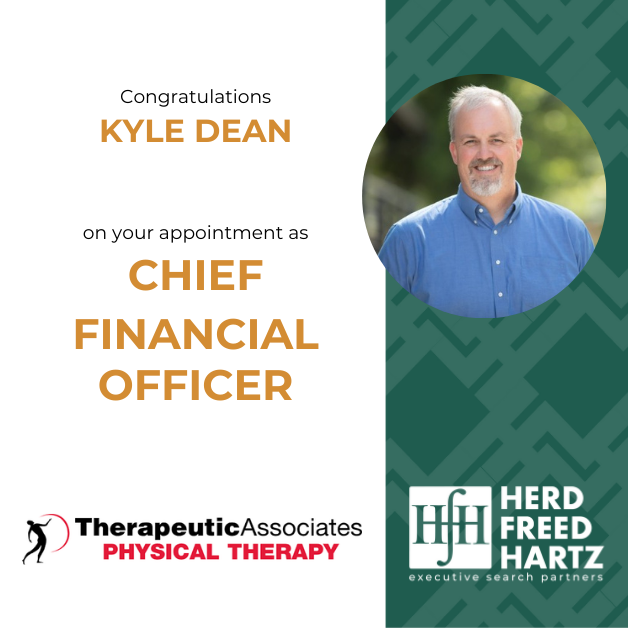
Kyle Dean – CFO @ Therapeutic Associates

In 2023, our executive search team was honored to partner with Therapeutic Associates, on a nationwide search to find their new Chief Financial Officer (CFO).

Therapeutic Associates is physical therapist owned and directed since 1952. Their clinics are managed by physical therapists who have the support and resources of a large organization, and the freedom to manage their clinic operations with their teammates to best serve their patients and the larger community.

They offer an unprecedented program called PT Cohort to all newly hired physical therapists providing leadership development, clinical education, peer support and social connectedness, and a chance to collaborate and share feedback. We also offer one-on-one Mentorship, an APTA-credentialed Orthopaedic Residency Program, specialty practice resources, research and teaching offerings, coursework including the NAIOMT COMT series, a clinical listserv, and many other education opportunities for our employees.

Learn more about Herd Freed Hartz’s
Finance executive search practice | Healthcare executive search practice

Yuan Snaza – Head of People @ Monolithic Power Systems

In 2023, our executive search team was honored to partner with Monolithic Power Systems, on a nationwide search to find their new Head of People.

Monolithic Power Systems is a $1.8B publicly traded company based in Kirkland, WA, is fulfilling their mission of developing technology for a more sustainable planet by designing small, ultra-efficient, easy-to-use power management systems. Chances are, you’re utilizing one of MPS’s ubiquitous products right now on your phone, laptop, television – even the lights overhead.

With an aggressive growth rate of 30-35% YOY (50% in 2022), MPS intentionally flies under the radar, quietly investing in research and thorough testing to offer increasingly efficient and reliable ways to power state-of-the art technology by delivering ever-greener solutions. MPS recognizes their impact on the planet’s climate through their Environmental Management System, a framework used to monitor their environmental stewardship.

In addition to their focus on the health of our planet, MPS focuses on the health of their employees. With 3300 employees globally based in offices in Kirkland, WA, San Jose, CA, Barcelona, Paris, Bangalore, Singapore,Beijing, Tokyo and more, they’ve built a culture based on innovation and empowering its people. They invest in talent by providing a work/life balanced culture, training and development opportunities, and promotions from within. Women make up nearly half of their management level staff, and the company welcomes employees of all backgrounds.

Learn more about Herd Freed Hartz’s
Human Resources / Head of People executive search practice | Technology executive search practice | Manufacturing executive search practice

Kristen York – CEO @ Multi-Service Center

In 2023, our executive search team was honored to partner with Multi-Service Center, on a nationwide search to find their new Chief Executive Officer (CEO).

Multi-Service Center helps to strengthen communities throughout south Puget Sound. With 50+ years of experience working with individuals who strive to make lasting change in their lives, Multi-Service Center continues to offer fresh and innovative resources that help people increase their self-sufficiency and stability. Multi-Service Center empowers people to become fully productive members of the community by providing services in energy assistance, housing, food, employment training, financial management, education, and advocacy for the elderly and disabled.

The more than 200 organizations and businesses that partner and collaborate with MSC not only
extend the agency’s reach in the community, but also bolster MSC’s fulltime staff of 90 employees and
its cadre of several hundred volunteers. Together, these partnerships allow more than 40,000 people a
year to receive the help they need to build pathways out of poverty. Multi-Service Center is a 501(c)3 nonprofit organization

Learn more about Herd Freed Hartz’s
CEO executive search practice | Non Profit executive search practice